Table of Contents
Introduction
Concrete is one of the most important building materials used in construction today. Almost every modern structure, from small houses to large bridges and skyscrapers, uses concrete in some form. It has become a popular choice because it is strong, durable, and can be used in many different ways.
People have been using concrete for thousands of years. Even ancient civilizations used materials similar to concrete to build long-lasting structures. Today, modern concrete plays a major role in the construction industry and helps engineers and builders create safe and reliable buildings.
What Is It?
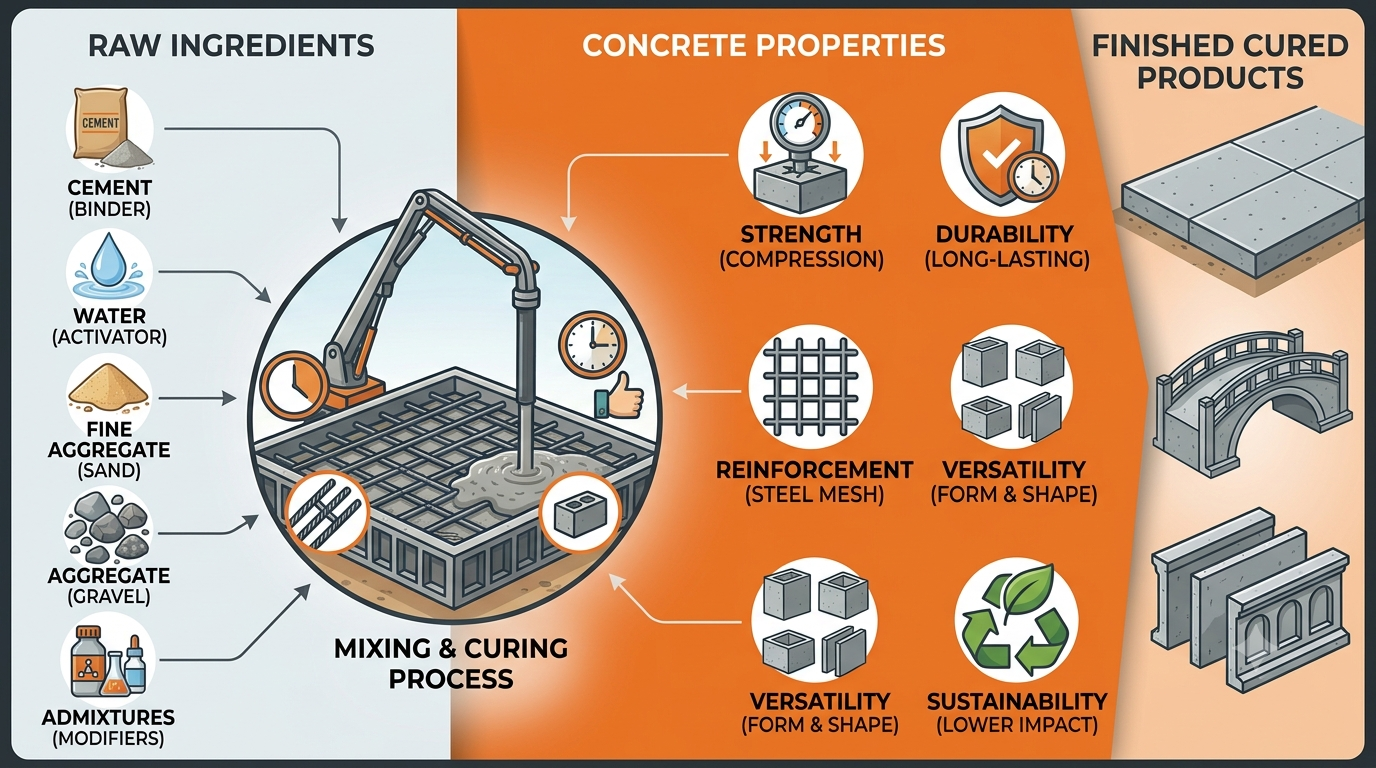
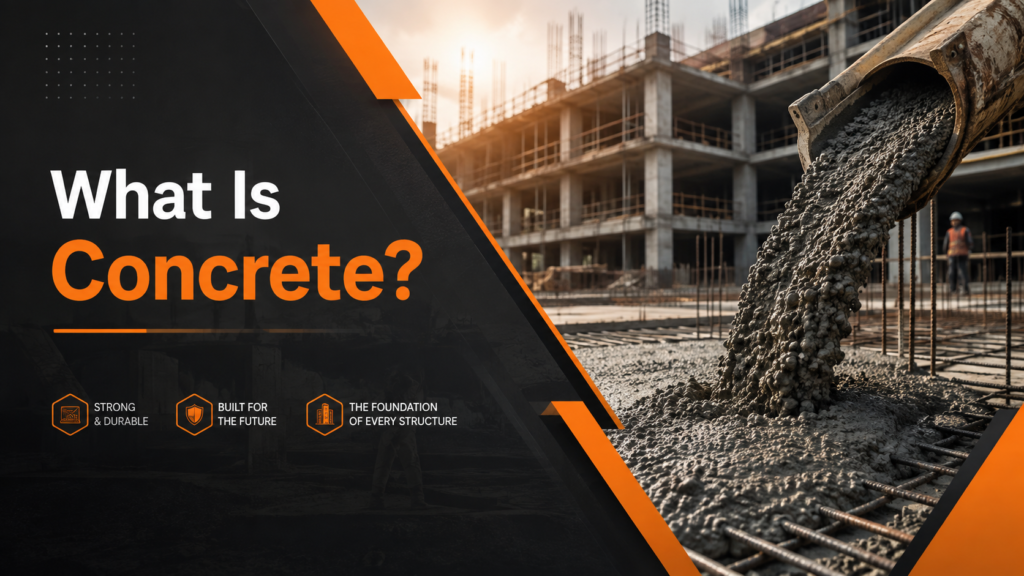
Concrete is a construction material made by mixing cement, water, sand, and aggregates such as gravel or crushed stone. When these materials are combined, they form a paste that gradually hardens and becomes strong over time.
Cement acts as the binding material that holds everything together. Water helps start the chemical reaction that allows the mixture to harden. Sand and aggregates provide strength and stability to the finished concrete.
Fresh concrete can be poured into different shapes and molds. After it hardens, it becomes a solid material capable of carrying heavy loads. This is one of the main reasons why concrete is widely used in construction projects around the world.
Types
There are several types of concrete used for different purposes. Some of the most common types include:
Plain Concrete:
This is the basic form of concrete made from cement, water, sand, and aggregates. It is commonly used for pavements and flooring.
Reinforced Concrete:
This type contains steel bars or steel mesh inside the concrete to improve its strength and resistance to cracking. It is widely used in buildings and bridges.
Ready-Mix Concrete:
This concrete is produced in a batching plant and delivered to construction sites in a ready-to-use condition.
Precast Concrete:
Precast concrete elements are manufactured in factories and transported to construction sites for installation.
Lightweight Concrete:
This type uses lightweight aggregates to reduce the overall weight of the structure.
High-Strength Concrete:
It is specially designed to provide greater strength for heavy-duty construction projects.
Advantages
Concrete offers many benefits that make it one of the most preferred construction materials.
- It has high compressive strength and can carry heavy loads.
- It is durable and can last for many years with proper maintenance.
- It is resistant to fire, water, and weather conditions.
- Concrete can be molded into different shapes and sizes.
- The raw materials used to make concrete are widely available.
- It requires relatively low maintenance compared to many other materials.
- It can be used in both small and large construction projects.
Because of these advantages, concrete remains one of the most trusted materials in the construction industry.
Disadvantages
Although concrete has many benefits, it also has some limitations.
- Concrete has low tensile strength and may crack under tension.
- It can be heavy, which increases the load on foundations.
- Construction using concrete may take time because it needs curing.
- Repairing damaged concrete can sometimes be difficult and costly.
- Poor mixing or improper curing can reduce its strength and durability.
- The production of cement contributes to environmental pollution.
Understanding these disadvantages helps engineers take proper measures during construction.
Applications
Concrete is used in a wide variety of construction projects.
Some common applications include:
- Residential houses and apartments
- Commercial buildings and offices
- Bridges and flyovers
- Roads and highways
- Dams and water tanks
- Foundations and columns
- Sidewalks and pavements
- Parking structures
- Industrial buildings and factories
Its versatility makes it suitable for almost every type of construction work.
Frequently Asked Questions
1. What is concrete made of?
Concrete is made from cement, water, sand, and aggregates such as gravel or crushed stone.
2. Why is concrete widely used in construction?
Concrete is widely used because it is strong, durable, affordable, and easy to shape into different forms.
3. How long does concrete take to harden?
Concrete begins to harden within a few hours, but it generally reaches most of its strength after about 28 days of curing.
4. What is reinforced concrete?
Reinforced concrete is concrete that contains steel bars or steel mesh to improve its strength and durability.
5. Is concrete waterproof?
Concrete is not completely waterproof, but it has good water resistance. Special additives can be used to improve its waterproofing properties.
Conclusion
Concrete is one of the most widely used construction materials in the world. It is made from simple ingredients but provides excellent strength, durability, and versatility. Whether it is a small house, a tall building, a bridge, or a highway, concrete plays an important role in making structures safe and long-lasting. While it has some disadvantages, its many benefits make it a preferred choice for builders and engineers. By understanding the types, advantages, disadvantages, and applications of concrete, anyone can gain a better understanding of why this material is so important in modern construction.