
Table of Contents
Introduction
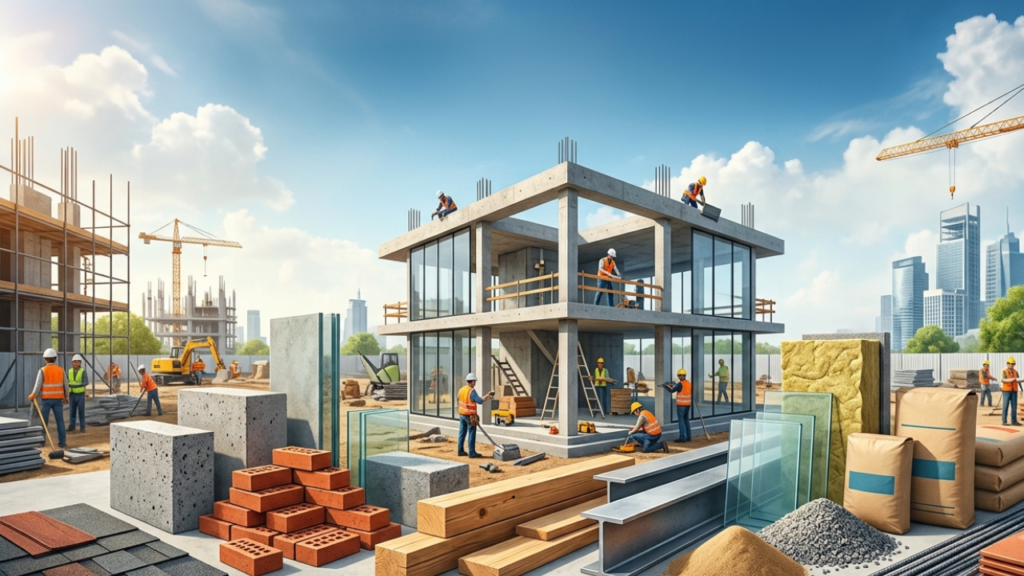
Whenever we see a house, office, bridge, school, or any other structure, one thing is common in all of them: building materials. These materials are the basic elements used to construct buildings and other structures. Without them, no construction project can be completed. From ancient mud houses to modern skyscrapers, building materials have played a major role in shaping the way people live and work.
Choosing the right material is important because it affects the strength, safety, appearance, and lifespan of a building. Different projects require different materials depending on the purpose, budget, and environmental conditions.
What Is It?
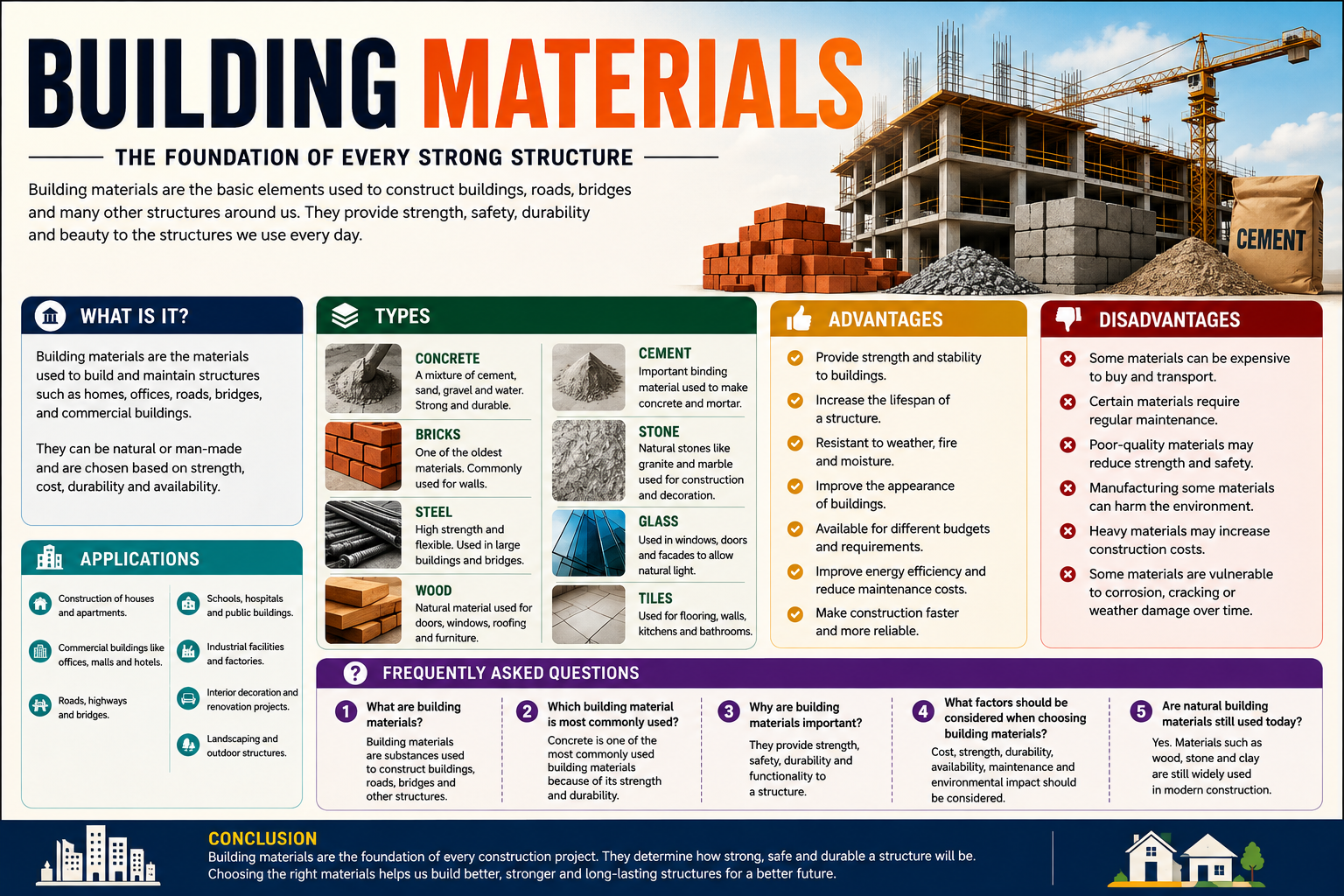
Building materials are the materials used to build and maintain structures such as homes, offices, roads, bridges, and commercial buildings. These materials form the foundation, walls, roof, floors, and other parts of a structure.
Some materials occur naturally, while others are manufactured in factories. Builders select materials based on factors such as durability, cost, availability, and performance. Good-quality materials help ensure that a building remains strong and safe for many years.
Types
There are many types of building materials used in construction. Some of the most common ones are:
Concrete: A mixture of cement, sand, gravel, and water. It is widely used because it is strong and durable.
Bricks: One of the oldest building materials. Bricks are commonly used for walls and partitions.
Steel: Known for its high strength and flexibility. Steel is often used in large buildings, bridges, and industrial structures.
Wood: A natural material used for doors, windows, furniture, roofing, and decorative work.
Cement: An important binding material used to make concrete and mortar.
Stone: Natural stones such as granite and marble are used for construction and decoration.
Glass: Used in windows, doors, facades, and interior designs to allow natural light into buildings.
Tiles: Commonly used for flooring, walls, kitchens, and bathrooms.
Advantages
Building materials offer many benefits that make construction possible and efficient.
- They provide strength and stability to buildings.
- Good-quality materials increase the lifespan of a structure.
- Many materials are resistant to weather, fire, and moisture.
- They help improve the appearance of buildings.
- Different materials are available for different budgets and requirements.
- Modern building materials can improve energy efficiency and reduce maintenance costs.
- They make construction faster and more reliable.
Because of these advantages, builders can create safe, comfortable, and long-lasting structures.
Disadvantages
Although building materials are essential, they also have some drawbacks.
- Some materials can be expensive to purchase and transport.
- Certain materials require regular maintenance.
- Poor-quality materials may reduce the strength and safety of a building.
- Manufacturing some materials can harm the environment.
- Heavy materials may increase construction costs.
- Some materials are vulnerable to corrosion, cracking, or weather damage over time.
For these reasons, it is important to select the right material according to the project’s needs and conditions.
Applications
Building materials are used in almost every construction project. Their applications include:
- Construction of residential houses and apartments.
- Commercial buildings such as offices, malls, and hotels.
- Roads, highways, and bridges.
- Schools, hospitals, and public buildings.
- Industrial facilities and factories.
- Interior decoration and renovation projects.
- Landscaping and outdoor structures.
Different materials are chosen depending on the purpose and design of the project. For example, steel is preferred for high rise buildings, while bricks and concrete are commonly used for houses.
Frequently Asked Questions
1. What are building materials?
Building materials are substances used to construct buildings, roads, bridges, and other structures.
2. Which building material is most commonly used?
Concrete is one of the most commonly used building material because of its strength and durability.
3. Why are building materials important?
They provide strength, safety, durability, and functionality to a structure.
4. What factors should be considered when choosing building materials?
Cost, strength, durability, availability, maintenance, and environmental impact should be considered.
5. Are natural building materials still used today?
Yes. Materials such as wood, stone, and clay are still widely used in modern construction.
Conclusion
Building materials are the foundation of every construction project. They determine how strong, safe, and durable a structure will be. From concrete and bricks to steel and wood, each material has its own purpose, benefits, and limitations. Understanding different types of building materials helps builders, engineers, and property owners make better decisions during construction. By selecting the right materials, it is possible to create structures that are strong, attractive, cost effective, and long lasting.
Building materials are the foundation of all structures we see around us, defining a project’s strength, safety and lifespan. However, the selection snd testing of these raw materials from reinforced concrete to structural steel is deeply ingrained in the larger subject of Civil engineering. To learn more about how these materials are used in real world infrastructure and structural design, see our in depth introduction to Civil Engineering and how it works.